CURRENT MOON

Tuesday, April 26, 2011

Cups


viaTeacats

Arbor Day: A Uniquely Pagan Holiday


This Friday is Arbor Day, a day set aside in the U.S. and many other places to plant, care for, and honor trees. It comes just after Earth Day and just before Beltane. Must be something in the "air."

If you're Pagan, this is the holiday for you! My little county is asking people to discuss their "favorite" trees. What's yours? Have you ever planted a tree? Hugged one? Worked with one to help you ground?

There was a pine tree deep in the forests of the Rocky Mountains. I sat at its base when I was, I think, four years old and realized that my life was going to be mostly about connecting to nature. My memory's hazy. I was "alone" (mom was inside the nearby rented cabin, dad was off fishing, and, well, there were the trees and, I've always believed, a brownish bear nearby) for maybe one of the first times in my life, and I adored it, I was alone and I expanded out into the Earth and ran what I did not know then to call my roots down into the rocky soil to twine around the pine tree's roots.

In A Pagan Ritual Prayer Book, Ceisiwr Serith writes:
You share the joy of your marriage bed unashamed,
Eternal Lovers, with the whole world.
Each opening flower, each leaf unfolding, is your cry of ecstasy.
Each bird or animal mating, each man and woman making love,
Is not a reflection, pale or otherwise, of your lovemaking,
but your lovemaking itself.
Each hug, each handshake, each smile,
between lovers, or family, or friends, or strangers:
children conceived today on this Beltane,
on this happy Beltane.

This time of year, almost all of my sex magic goes to the herb bed and the seven magical trees that I've planted since I moved here. Shortly before they moved, the people who sold this cottage to me planted two fig trees. Every summer when I harvest their fruit, I see sex magic manifest in trees. Where does your magic go this time of year? Is there even a single tree that manifests it?

Last Mabon, my wonderful job took me out to San Francisco and I spent (not enough!) time with some of Mamma Gaia's oldest trees, the Redwoods in Muir Woods. Those trees make my lovely oaks, which have only been around since, oh, say, 1711 when Handel was composing, seem juvenile by comparison. In Muir Woods Meditations, Dag Hammerskjold is quoted as saying that:
Here man [sic] is no longer the center of the world, only a witness but a witness who is also a partner in the silent life of nature, bound by secret affinities to the trees.

I think that's about right. Almost not a week goes by that I don't dream of taking G/Son out there some day so that his little Pisces soul can experience those ancient land wights as I did. One of my most mundane goals this year is to bring my physical health to a level where that will be possible. I'll sit down at the end of this month -- one third of the way through this calendar year -- and evaluate my progress on that goal.

In Second Nature: A Gardener's Education, Michael Pollan quotes Russel Page as saying that, "To plant trees is to give body and life to one's dreams of a better world." As Pollan notes:
It's a sobering responsibility, picking the site for a big tree; get it wrong, plant it too close to the house or an electrical line, and you will someday force a terrible decision on someone. [People who lived here before I did, please take heed!] To plant a big tree is to throw a long shadow across the future of a place, and we're obliged to consider its impact carefully.

This shouldn't make you reluctant to plant trees, it should just make you look up and also consider the Element of Air. Where will this tree be in 20, 30, 40 years? Where will it be when you are gone? Surely, it will be making oxygen, giving wildlife a place to thrive, and, maybe, making fruit. But will it also have room to grow?
Pollan goes on to note that:
[T]he etymology of the word true takes us back to the old English word for "tree": a truth, to the Anglo-Saxons, was nothing more than a deeply rooted idea. Just so, my version of a planted tree -- envoy to the future, repository of history, index of our respect for the land, spring of aesthetic pleasures, etc. -- is "true"; it has deep roots in the culture and serves us well.

Pollan notes how important trees have been within the American, and other, landscapes:
The American Indians were not the first or the only people ever to consider trees divine; many, if not most, pre-Christian peoples practices some form of tree worship. Frazer's Golden Bough catalogs dozens of instances, from every corner of Northern Europe as well as from Ancient Greece, Rome, and the East. For most of history, in fact, the woods have been thickly populated by spirits and sprites, demons, elves and fairies, and the trees themselves have been regarded as the habitations of the gods.

Well, yes. I go to work every day through the Spout Run Woods and, I can assure you, the woods still are.

There are, to my mind, two trees famous and important to American history. First, there is a story, and Goddess, does it ever capture American history, of George Washington admitting that he chopped down a cherry tree. I imagine that Pappa Jung would have had a lot to say about this. And, then, there are all those apple trees that John Chapman (Johnny Appleseed) planted all over America, providing cider for generations of Americans,. Are there others that I'm forgetting?

One of my most favorite groups is the American Chestnut Foundation, a group working to re-establish chestnut trees, which once covered most of the MidAtlantic, to their landbase. If you ever want to donate to a great cause, I think that theirs is one.

I'm not suggesting that you add an extra holiday to your calendar between Ostara and Beltane. We're all too busy to ground and pay attention as it is. I am suggesting that you talk to your Circle, Coven, Grove, etc. about how you can, next year, incorporate Arbor Day into your rites.

May there be acorns, pine cones, large trees, weeping willows, dogwoods, redwoods, cherries, and figs in your future. May you and the trees spend this incarnation learning how to breathe each other into your cells and how to encode messages to your grandchildren, etc. into each other.

Blessed Arbor Day.

(Yes, that's John Denver. I'm old. It's gotten a whole lot better since then?)

Come Dance Between the Trees on Beltane

Monday, April 25, 2011

Blessed Beltane


May it be so for you.

My New Name for a Blog


What Phaedra Said.

Just gotta understand your shake.

Picture found here.

Sunday, April 24, 2011

Oaks and Beltane


My little cottage is surrounded by some (three-to-four-hundred-year) old oaks. They help me to ground; every day I run my roots down into the red Virginia clay where these lovely beings have been thriving since before America was America. They also center me; I know that I am home when I can feel myself surrounded by oaks. They support the squirrel clans who are my closest neighbors and they provide housing for over a half-a-dozen different kinds of birds. They shade my house in the summer, give me more than enough firewood, and provide me with provenance. I'm not embarrassed to announce myself to the Elements or to the Potomac River when I can state that I come from that bit of Earth bounded by all of those old oaks. There are callouses on my hands from raking up oak leaves and acorns; those are my bona fides to the doors between the worlds.

"My" oaks are slowly dying; although oaks can live 400 or 500 years, global climate change is drying out our summers and stressing our oaks, making them subject to oak borers, which kill them within a few years, at the most. Since I moved here almost a decade ago, my neighbor and I have had to take down three of them, and the final few are only going to last another couple of years.

When they go, we will probably replace them with pine trees. No leaves and acorns to rake every Fall. But I am not sure how I will know, without them, that it is Beltane.

Yesterday, I came home from work and sat outside for a long time in the woodland garden. There was not an oak catkin to be seen. Not one. I wandered the whole yard; no oak catkins. Today, I came home from work and there were oak catkins all over my front steps, all over my back deck, all over everywhere. It's as if, at some point in the last 12 hours, the bell sounded and every oak tree in the neighborhood said, "Oh, OK, time for the Great Rite. Here you go!"

There's never been a Beltane here at my little cottage when I haven't gone out, an hour or two before the Witches showed up, and swept mounds of oak catkins off the steps and deck. There's never been a Beltane when I went out at dawn to wash my face in dew and didn't find the dew full of yellow-green oak pollen. How will I know that it's Beltane when all of my old companions are gone?

What tells you, sans doubte, that it's only days until Beltane?

Picture found here.

Sunday Ballet Blogging

Saturday, April 23, 2011

Spinning

What a Long, Strange Trip It's Been


The truly brilliant and always-grounded Athenae has up a great weekend post asking people to discuss the most transformative trips they've ever taken. What a great question!

One thing that amazes me is how, for most of her commenters, the important trips were trips into nature. Oddly, one of my most important trips, much as I always push a connection with nature, was a trip from the mountains and woods to a city.

As I answered at Athenae's blog, one of the most transformative trips that I ever took was when I was five and my family moved from rural Colorado ("my city of mountains, stay with me, stay") to Washington, D.C. For that little, impressionable Pisces, walking off of the train into a city of marble monuments and heroic statues was completely transformative. My entire conception of what the world was and could be changed when I moved from wooded mountainsides to a city full of architecture and gardens devoted to an heroic archetype of democracy. I fell madly in love (and fifty years later, I am only that much more devoted) with every carved marble wheat sheaf and arrow, every faux-Grecian column, every naked woman representing some high-minded ideal (bite me, John Ashcroft, no, really), every amazing painting calling to me from the walls of a museum. I gave myself all the way to the United States Botanical Garden, to the National Arboretum, to the fountains (Lit! At night! I'd never seen a fountain before, not to mention imagined that they could be lit up at night! Kennedy was in the WH, it was Camelot in DC, the entire city seemed, to me, full of sparkling fountains that shone all night long. And there were ladies in pillbox hats and amazingly-constructed dresses w/ princess seams, wearing 3/4 length gloves! 3/4 length!).

I still love to retreat to the mountains, although, now, for me, five decades later, it is the Allegheny and Appalachian mountains that soothe my soul. I haven't been to the Rockies for forty years. And I've been v happy during some long, long trips to the California coast. But in my dreams, I am still, most often, in a very wet city on the edge of a river, a city full of marble monuments and archetypical statues.

Just last night, I dreamed that there was a wonderful arts program inside the Capitol, run by a brilliant and energetic young woman. I was hosting a young teen-age woman interested in government and art and, finding ourselves downtown with a bit of extra time, I decided to drive her to the Capitol to check out the arts program. We drove past statues that, while they do not exist in the "mundane" D.C., most certainly do exist in the archetypical DC: statues of heras, and feminine beasts, and deep principles. My (long dead) mother and I walked our guest into the Capitol which turned out to be, as only the not-so-"mundane" Capitol really is, full of open skylights that a young woman might step through and hurt herself and large bookshelves that she could climb on and pull over on herself. And, yet, we got our guest up to the front to meet the young hera running the history and arts program and, when I awoke to put myself magically back into the dream and started to soothe over the dangers, my young guest showed up in my not-awake-not-asleep dream and said, "Please, don't. I like it better like that." She's right. So do I. I love this city best with all of its dangers and pitfalls. Especially the ones that people mean when they sneer about "inside the Beltway."

I opened up and embraced them half a century ago when I was five. One of the first dreams that I ever had of this city was when I was six and dreamed that I was swimming in a fountain at the pool of Blessed Mary's feet, just outside Union Station, looking up and watching her nod to me. (There is no such "real" place in the "mundane" city, not even at the Shrine of the Immaculate Conception, which somehow transposed itself with Union Station in my dream.) When I was six, Mary was the only image that I had for the divine feminine. Today, I see that ancient dream as my first attempt to connect to (swim in the water of) Columbia's symbolic city. May I swim here until I die. May you dream yourself into your own most important landscape.

How would you answer Athenae?

When you bring a child to a magical place, you can't be surprised if she spends half a century or so living there, both physically and in her dreams. Where will you take the most important child in your life?

Picture found here.

Daily Practice


Photo by the blogger. If you copy, please link back.

Thursday, April 21, 2011

Cottage Garden


It's an almost impossibly perfect day here on the banks of the overfull Potomac River. I'm doing work that I'm good at and that I love. My garden is taking off. My dreams keep telling me interesting things. G/Son is thriving and I'm having dinner w/ Son tomorrow at a new French place in D.C. And while the world goes to hell in a handbasket and Obama (who got elected because that evil woman voted for the war) is now sending drones into Libya, I'm still filled with gratitude for the chance to help re-weave the web every morning that the Goddess wakes me up to do this interesting thing all over again. One of these times, I'm bound to get it right. I live in a city that gives me a chance almost every day to quickly ground, center, throw a web of intent across a motorcade or helicopter or government official and raise energy from the Earth to guide those involved to open to goodness, mercy, compassion. No matter what else, I can go to bed every night in my little cottage and be grateful for that.

I'm off now to sit at my altar, to which I'm bringing the first gardenia bloom of the season as on offering. They say that the Summerlands smell of apples. That will be nice, but I hope that they have gardenias there, too, because I may love that smell better than almost anything else -- well, except for the smell of Son's head when he was a baby -- ever. What's your favorite smell?

There's some great writing out there on the internets (as W used to say).

As always, if you only read one blog all week, it should be The Arch Druid Report.

Literata makes a great point here.

Thalia shows what it's really like to work with all you've got to be in relationship with a bit of Earth.

Beth Owl's Daughter talks about changing your home in order to change your life. Magic, indeed.

Medusa has a list of events from Wisconsin to the Netherlands. They will keep on speaking her name.

Patti Winginton adds to my comments about how Christians should (not) talk to Pagans.

Byron Ballard reminds us that in the midst of life, we are in death and the veils can thin at any time.

The always erudite and sensible Makarios links to Swidler's Dialogue Decalogue.

Teacats points out in comments that the divine S.J. Tucker already explained everything in song to Christians who want pointers on how to talk to Pagans.

And, on Twitter, Cary Rockland asks a question that's had me thinking all afternoon. What "success rituals" do you use to achieve peak performance? I keep wondering if I even have any? Best I've come up with is: lean protein at breakfast and remembering my "why," but I feel as if this is a question I need to work on a lot more. How would you answer it?

Picture found here.

Wednesday, April 20, 2011

Me, In a Bad Mood


Jason Pitzl-Waters, at the Wild Hunt links to this interesting post by a Christian telling other Christians "how to talk to Pagans." It's not as creepy as the recent book on the same subject, but, well-intentioned as I am sure that its author is, it's still insulting and creepy. (The odious John Morehead in comments only makes it that much worse.) In the end, this entire post is all about "othering" Pagans under the guise of "no, really, try to treat them as if they were humans; they're so dumb, they'll really appreciate it!"

First, though, and I mean this, kudos for getting the capitalization mostly correct. It's more than most do.

As several people note in the comments to the post, the unspoken "elephant in the room" in any Christian discussion about "how to talk to Pagans" is that the advice isn't given to help you to have, say, a nice chat about the weather or your local neighborhood zoning issue, nor is it given to help you to convey to the Pagan in your workplace when you need to get their report. Oddly, most people wouldn't need a guide to help them talk to Pagans about those topics; believe it or not, we're pretty easy to talk to about zoning issues and when reports are due. (See also, e.g., your kids, my garden, the weather, today's traffic, where to go for lunch, taxes, whether to go into detail on a subtopic in our legal memo, who's going to play bad cop on the conference call, and the funny thing that happened to me this weekend. Difficult as you may find it to believe, I had conversations today on all of those topics with Christians who're unaware that I'm a Pagan and who have no need for a special guide to figure out how to talk to me. OK, they did have to e-nun-ci-ate very clearly, because, you know, it's difficult for Pagans to keep up with modern English.) No, this kind of advice is all about the need of most Christians to at least lay the groundwork (aka "begin to 'dialogue'" or "develop a 'relationship'") to convert the Pagan to the "one true religion," aka, whatever brand of Christianity said Christian practices. It gives the whole thing that skin-crawling, what-is-this-huckster-trying-to-sell-me vibe that makes most of us feel exploited and in need of a shower. Look, I've been a Pentecostal Catholic. I know you're desperate to convert me. (Points! I got points! Now Jebuz will surely let me into heaven; I've contributed to his Ponzi scheme!) Playing How to Win Friends and Influence People, by acting as if, "Oh, hell, no, who me?, No I just want to talk to you, [Insert Pagan's first name]; I'm not trying to convert you! [Smile and use Pagan's first name again]" insults my intelligence, which, in spite of what you appear to believe, is actually my one strong suit.

Second, thanks for the slide show. No, really. Maybe I can put together a bunch of random slides showing stereotypes of Christians to illustrate the post I'm not going to write called: How to Talk to Christians for Fun and Profit. I spent today in a business suit, Hermes scarf, and Ferragamo shoes, and, oddly, none of those show up in your illustrative slide show of modern Pagans. Maybe you can put together a slide show of Hispanics in low-riders? Irish Catholics drinking too much? Christians handling snakes and denying their children needed medical care?

I can't get over the notion that, in a different context, this same post could be called "How to Talk to Black People" or "How to Get a Women's Libber to Date You." So we get gems such as:
Pagans are people, just like us, and they appreciate a personable approach.
Thanks. No, really, thanks. Nice of you to let me into the Human Club. Bite me. And, it's "just as we are," not "just like us."

And:
[B]e mindful that 80% of communication is nonverbal and the average Pagan is far more sensitive and attuned to symbolic communications than the average Evangelical.

And black people all like basketball and they're a lot more sensitive to rhythm than you are, so be sure to snap your fingers and groove while you chat them up. Women are much more in tune with emotions, so be sure to use "feeling" words when you talk to them. Jews love money, so if you're talking to them, be sure to mention that you got your suit wholesale. I guess that you have to have been on the receiving end of some of these "dialogue" tactics to understand how truly insulting they are. Hispanics? More excitable. Chinese? Inscrutable. And every single old white man must want to discuss golf, right? Look, I'm as Pagan as they come and I LIVE in my left brain. I'm literally learning disabled when it comes to "right brain" skills (see e.g., nonverbal communication). What I understand is what I can read in a well-written legal brief. Sorry to fail to live up to your stereotype of me. See why I think you only want to sell me shit? See why you piss me off?

Or:
Do … focus on Jesus.

Right. Because, first, most Pagans have never heard of him and are just dying to have even more Jesus stuffed down their throats. Kali fuck, you can't live in this society for 5 minutes without having Jebuz, Jebuz, Jebuz rammed down your gullet, so for sure a great way to have a conversation with most Pagans is to focus on Jesus. (When talking to the mark, er, um, customer, keep referring to the product.) Look, while the number of "cradle Pagans" is growing, the majority of Pagans living in America today were raised in Christian families. Like many of us, I, for one, got more Jesus growing up than I got fluoride, physical education, exposure to classical music, or history of the Americas before Columbus. I've forgotten more about Jesus than most Christians ever learn. I know Jesus; I had, for years, an intimate relationship with Jesus, and I left him. "Focusing" on him is as respectful to me as it would be for you to focus every conversation with me on my ex. I don't feel a need to spend my conversations with every Christian "focusing" on Hecate or Columbia. My relationship with those Goddesses is personal and I can't think of a single reason why you'd care. Accord me the same respect. I realize that leaves you with no reason to talk to me, since apparently the only reason for you to talk to me, even though I am "people, just like you," is to convert me to Jesus. That's ok. Keep on moving.

And:
Not only should you not expect Pagans to take the bible as authoritative as you do, you should not expect them to take any scripture as authoritative as you do.

Sigh. You know, this isn't a bad point, if you accept the premise that the Christian's only real goal is to convert the Pagan. Telling me that I have to accept Jesus as my personal savior because your holy book says that I have to do that to get into your heaven is pretty silly, given that I don't accept your holy book. But, Kali Fuck: "take the bible as authoritative as you do"? Again, I live in my left brain. If you can't write English (hint: Buy an "ly" or revise the sentence), you're not going to have a very good conversation with me. And my Book of Shadows sure doesn't look anything like the Book of Common Prayer (one of the great products of the English language, BTW) or a Catholic missal. But keep on misconstruing.

Finally, there's:
Don't … be afraid to challenge, as long as you’re respectful
Through many years of experience I’ve found Pagans aren’t beyond being challenged, provided the challenge is respectful, and preferably within the context of relationship. . . . With such a history of bad blood between Pagans and Christians[,] I can’t promise you won’t have a bad experience, that you won’t ever experience rejection, even following these tips. But I can say that most the time, if you approach Pagans with the right attitude, you’ll find them quite open to conversation about things of the Spirit.

Yes, it's true. There are a few of us who won't melt if you challenge us. Weird, huh? And if you just approach those Negroes in a nice way, you can talk to them about almost anything. Well, OK, speak slowly, cuz they do, and be sure to say how articulate that Dr. King was. Be nice, and don't use the "N-Word," cuz even the ones who aren't too techy will go off on that, for some odd reason. But you can challenge some of them, for sure, if you do it nicely. And even those women's libbers can be calmed down and appeased to the point where you can often get their phone number; can't promise that some aren't so bitter that they won't reject you, but, hey, just use "feeling words," and keep trying! If you keep your sentences short and just speak loudly, even your Hispanic gardener can understand what you're saying.

I'm not even going to discuss the "Don't dump on women, gays, and the environment." Patriarchy; soaking in it; all I'm saying.

Here's an idea. Stop approaching every human being on the planet as a "customer" and see how that changes you. Spend some time talking to your Jesus about that. Meanwhile, you can ask me about the Nats' latest game without a guide book.

Picture found here.

And We Are Living in the Material World . . . .


Richard Louv notes:
For decades, our culture has struggled with two addictions: to oil and to despair. But what if our lives were as immersed in nature as in technology every day? What if we not only conserved nature, but created it where we live, work, learn and play? The filmmaker Camilla Rockwell recently sent me a clip from her film Mother Nature’s Child: Growing Outdoors in the Media Age.

Here's Rockwell's interview of Louv:

Richard Louv: Human Energy Through Nature Connection from Camilla Rockwell on Vimeo.


Here's Louv discussing easy ways that you can help the child (daughter, son, niece, nephew, grandchild, godchild, neighbor's child, student, etc.) in your life spend time out in nature -- now, in your neighborhood, town, suburb. I like method No. 7:
Find a guide book. Consider “I Love Dirt,”; Joseph Cornell’s classic “Sharing Nature With Children”; and “Coyote’s Guide to Connecting with Nature.”
I'm going to buy Coyote's Guide to Connecting with Nature for me and G/Son.

I'm also planning to read Louv's new book: The Nature Principal. One, and it's just one, of the things that I love about Louv is his ability to convey the need for a relationship with the material, natural world in a way that anyone, even non-Pagans (and you know how difficult they can be to talk to!) can get. I gave his last book, Last Child in the Woods to everyone in my family last year at Winter Solstice.

How did you connect with nature today?

Tuesday, April 19, 2011

This

Elements: Fire


Rima:
Sometimes occasions just collect goodness to them, and the minutes settle themselves into the fire like sticks, tessellating into the perfection of the night, and you recognise that clear familiar joy under the stars of being outside by a fire with the edge-folk you love so.
May it be so for you.

Read the whole post here.

Find Rima's art here

Tuesday Poetry Blogging


Last Spring
BY GOTTFRIED BENN
TRANSLATED BY MICHAEL HOFMANN

Fill yourself up with the forsythias
and when the lilacs flower, stir them in too
with your blood and happiness and wretchedness,
the dark ground that seems to come with you.

Sluggish days. All obstacles overcome.
And if you say: ending or beginning, who knows,
then maybe—just maybe—the hours will carry you
into June, when the roses blow.
Source: Poetry (March 2011).

PIcture found here.

Monday, April 18, 2011

I'm In

Elements: Water


[I]n order to see when the correct proportions and balances have been achieved, the [garden] designer must look with eyes conditioned by meditation. Creating the right feel of water is a contemplative experience arising from a certain state of mind, not something arbitrary or something achieved by application of standard rules. The relationship with water should be personal and intimate. On both a practical and metaphorical level, in the West we have relegated water to a diminished role. We should instead offer water the respect and understanding that it deserves. When we create a waterfall, a stream, or pond, think of it as expressing enlightenment, and always try to convey that energy. The water is not simply one possible physical part of the garden; it is the connection between all the parts.

Martin Hakuba iMosko, Asla, and Alxe Noden in Landscape as Spirit; Creating a Contemplative Garden

Is your relationship with water personal and intimate? How do you incorporate water into your home, bit of Earth, daily life? Do you know from which body of water your drinking water comes? How could you find out? If you knew, how would you invoke Water differently?

Picture found here.

Sunday, April 17, 2011

Sunday Ballet Blogging


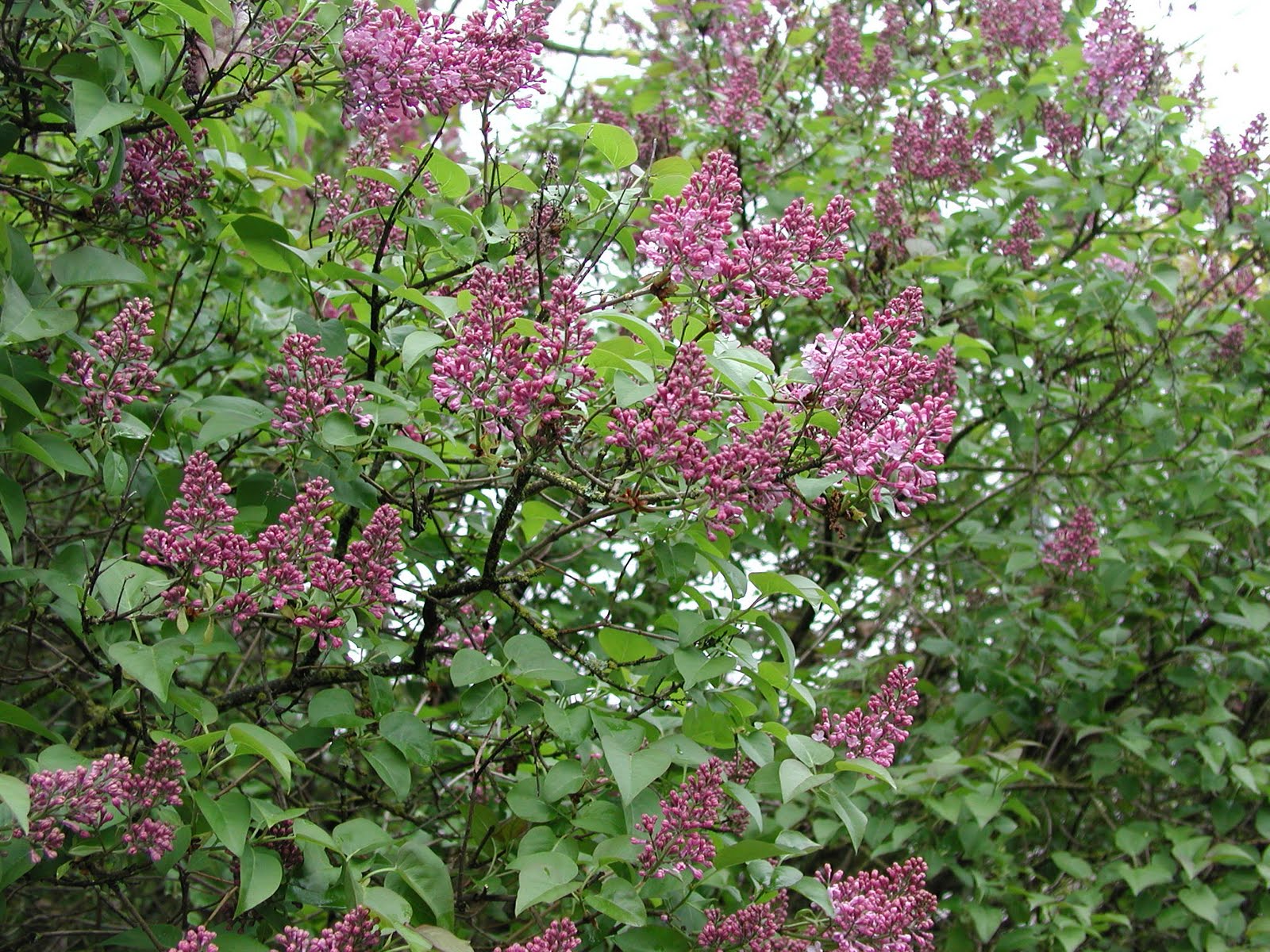
My lilacs have big, purple buds. I've loved lilacs since I was a little girl.